
AI, but make it useful
Two SiT AI events, a louder tech landscape, and a few thoughts on learning the tools without outsourcing your thinking

Aaaaand Q1 is over.
And no, AI has not calmed down. If anything, it’s become even louder.
Hello SiTizens!! I’ve been watching the AI conversation this year, and it’s felt a bit like standing in the middle of two people shouting opposite things at once. One’s saying AGI is around the corner and the other saying everyone’s jobs are gone by next Tuesday.
So, how do we navigate this?
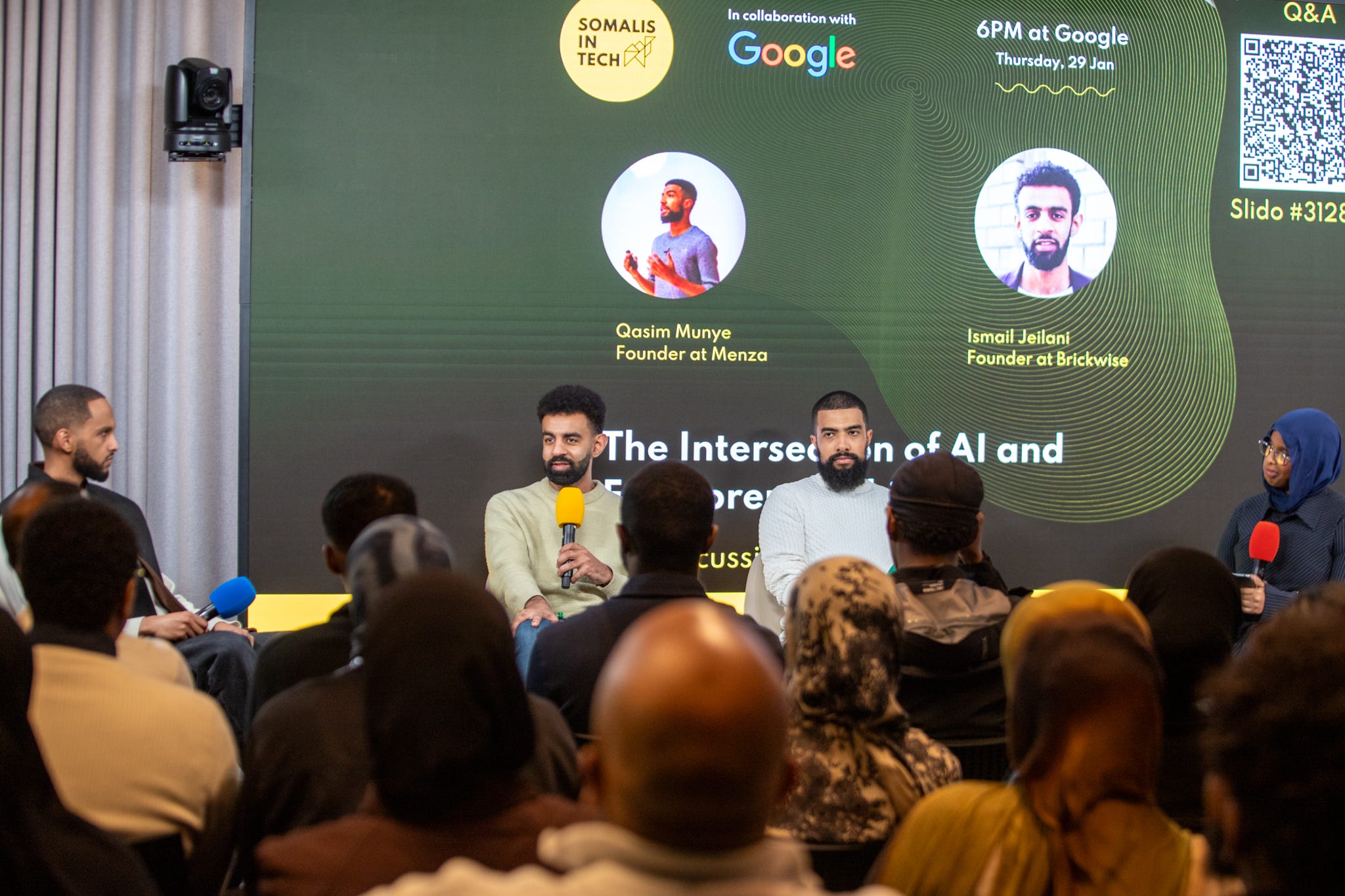
This year, Somalis in Tech hosted two AI events. We started with The Intersection of AI and Entrepreneurship, back at Google, hearing from founders Ismail Jeilani of Brickwise and Qasim Munye of Menza on what it looks like to build with AI from the founder seat. Then we came back with How I AI, where Sami Tahir, Ahmed Mahdi, and Ali Mohamud shared how AI actually shows up in their work, from founder workflows to engineering and day to day problem solving.
I keep coming back to the same thought after both events:
The most useful AI conversations are the ones asking: What can these tools actually do right now? Where do they help? Where do they fail? And how do we stay thoughtful while learning them? Because that feels like the real question.
AI is getting better. Quickly.
The tools are improving, smaller models are becoming more capable, and access is getting easier. You don’t need to be sitting inside a big tech company to experiment anymore. You can be a founder testing an idea, a student trying to understand a hard topic or someone in the community trying to learn what all the hype is about.
The barrier to entry is lower than it was even a year ago. More people can build, research, write, prototype, and play around with tools that once felt out of reach. But better does not mean perfect.
AI can still struggle with context, accuracy, reasoning, and knowing when it’s wrong. And the strangest thing about these tools is that they can be wrong so smoothly. And that’s where I believe we need to be careful.
The real skill is not learning how to use AI. But learning how to use it with judgement. As in, knowing when it’s right to ask AI and knowing when to ask a person. You’ll come to learn that AI is not always the best tool for the job. As when the work needs lived experience, cultural context, or care, AI can help the process. But, It should not replace the thinking.
The jobs conversation needs this same kind of calm.
Yes, work is changing. Yes, some tasks will shrink. Yes, some roles will evolve quickly. Coding, research, customer support, operations, design, marketing, and analysis are already being reshaped.
But the story isn’t as simple as humans out, machines in.
It’s more about who adapts, who gets supported, who gets access, and who gets left behind.
For people early in their careers, AI literacy is becoming something worth taking seriously. For people already working in tech, it’s worth understanding how your role is changing before someone else defines that for you. For founders and builders, this is one of the most accessible moments in years to test ideas faster, research faster, and iterate faster.
Provided you still know what good work looks like without the tool!
AI can help you move faster, but it can’t give you taste. It can’t give you values. It can’t fully understand your community, your history, or the cultural context behind what you’re building.
For communities like ours, that question feels especially important.
Who gets represented in these systems?
Who gets misunderstood?
Who gets access?
Who benefits?
These questions are not separate from tech. They’re part of the work.
And that’s why our two events felt timely. So, the takeaway is a simple one.
Do not outsource your thinking and do not ignore the tools either.
A little SiT x Iftiin moment
Speaking of building with intention, we’re excited to share a special collaboration with Iftiin that celebrates Somali creativity in tech.

This drop is about more than design. Every purchase helps fund initiatives like our kids Code Club and supports projects like Aruuri, which focus on giving back to our community.
Preorders are now open for hard shell cases, and laptop sleeves are available to purchase right away.
You can check it out here:
https://theiftiin.com/shop/
Anyway.
Q1 is done.
We’ll be hosting more events, more practical sessions and having more conversations this year, so keep an eye out.
A few links from How I AI
A special thank you to our How I AI speakers, Sami Tahir, Ahmed Mahdi, and Ali Mohamud, for sharing not just how they use AI, but how they think about it.
They also shared a few useful places to keep learning without getting lost in the noise:
Reports, research, and legislation
Future of Jobs Report 2025, World Economic Forum
AI news and updates
https://www.artificialintelligence-news.com
https://news.mit.edu/2026/new-technique-makes-ai-models-leaner-faster-while-still-learning-0409
Social sources
https://www.instagram.com/rpn.tech/
https://www.tiktok.com/@askcatgpt?lang=en-GB
Well done and keep it up. Ai is not a game changer.. more like change changer! Nov 2022 I read an article about ChatGPT in the AFR newspaper in Melbourne, Australia. Dec 2022 I was in San Francisco, Silicon Valley 2 b precise. Why? Decades in the Tech industry taught me the difference between hype and Killer-App.. my gut feeling was correct. My thoughts on this see Somalia.substack.com and other fora. Agree with the title of your post... let us make Ai useful.. iA. 😉.